


Shopping for authentic powerloom sarees can feel overwhelming when you’re faced with countless options online and in stores. This guide is perfect for saree enthusiasts, first-time buyers, and anyone wanting to make smart purchases without getting fooled by imitations.
Authentic powerloom sarees offer the perfect blend of traditional craftsmanship and modern efficiency, but spotting genuine pieces requires knowing what to look for. Many buyers struggle to tell the difference between authentic powerloom sarees and machine-made copies that flood the market.
We’ll walk you through examining fabric quality and texture to feel the difference between genuine and fake materials. You’ll also learn how to inspect weaving patterns and design precision, plus we’ll show you how to verify borders and pallu construction that authentic pieces are known for. By the end, you’ll have the confidence to identify genuine saree pieces and make purchases that truly reflect the quality and heritage you’re looking for.
Examine the Fabric Quality and Texture

Feel the Fabric Weight and Density
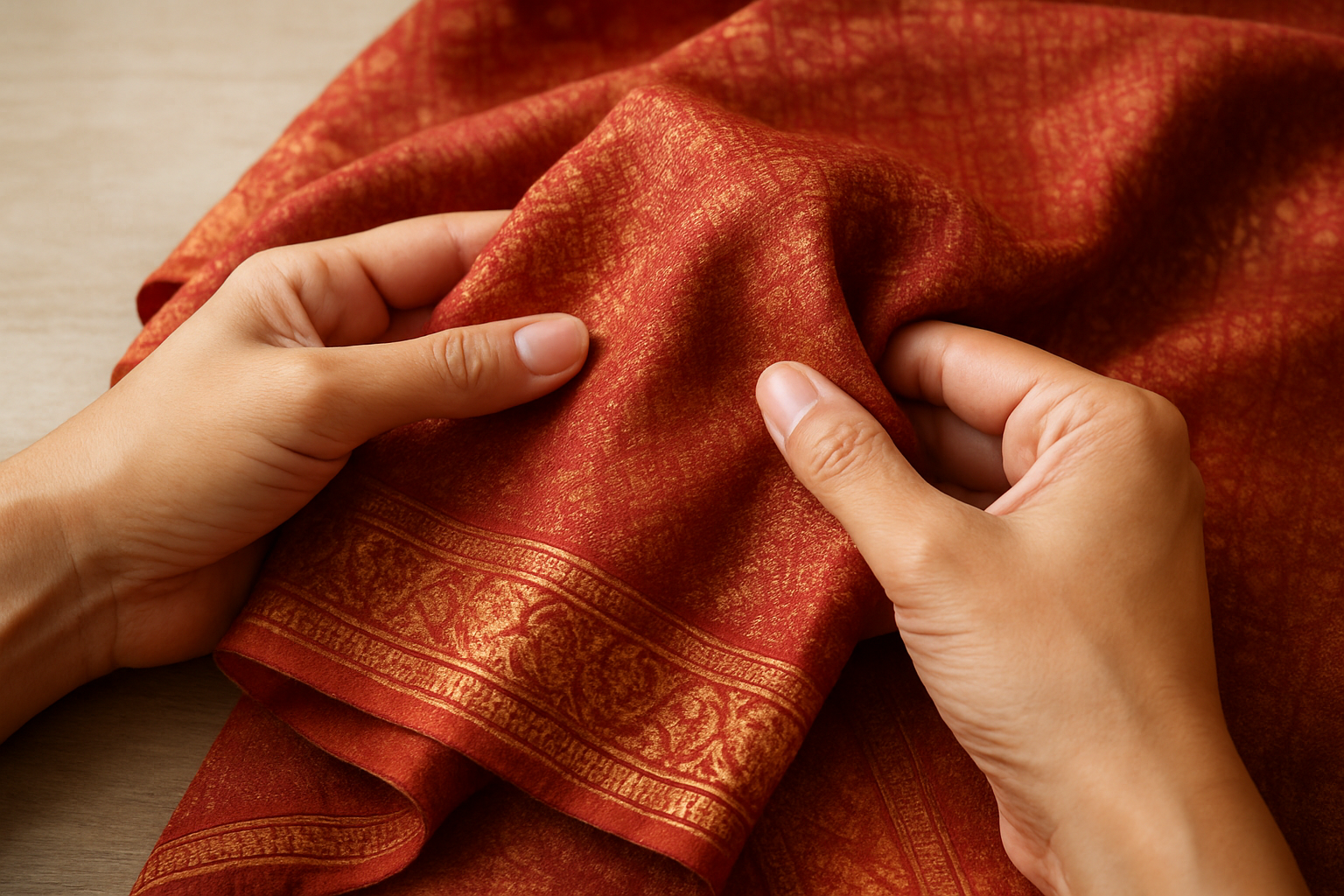
Authentic powerloom sarees have a distinct heft that sets them apart from cheap imitations. Run your fingers across the fabric – genuine pieces feel substantial without being heavy, with threads woven tightly together creating a balanced density that speaks to quality craftsmanship.
Check for Consistent Thread Thickness
Quality powerloom sarees maintain uniform thread thickness throughout the entire garment. Examine different sections of the saree under good lighting, looking for any variations in thread width. Authentic pieces showcase consistent weaving with threads that remain the same thickness from border to body, indicating proper manufacturing standards.
Look for Smooth Surface Finish
The surface texture reveals authenticity immediately. Genuine powerloom sarees feature smooth, even finishes without rough patches or irregular bumps. Your hand should glide effortlessly across the fabric surface, encountering no snags or uneven areas that suggest poor quality control during the weaving process.
Test Fabric Durability with Gentle Stretching
Perform a simple stretch test by gently pulling a small section of the fabric between your fingers. Authentic powerloom sarees demonstrate resilience, returning to their original shape without permanent deformation. The fabric should feel strong yet flexible, showing no signs of weakness or thread separation during this gentle assessment.
Inspect the Weaving Pattern and Design Precision
Analyze Pattern Symmetry and Alignment
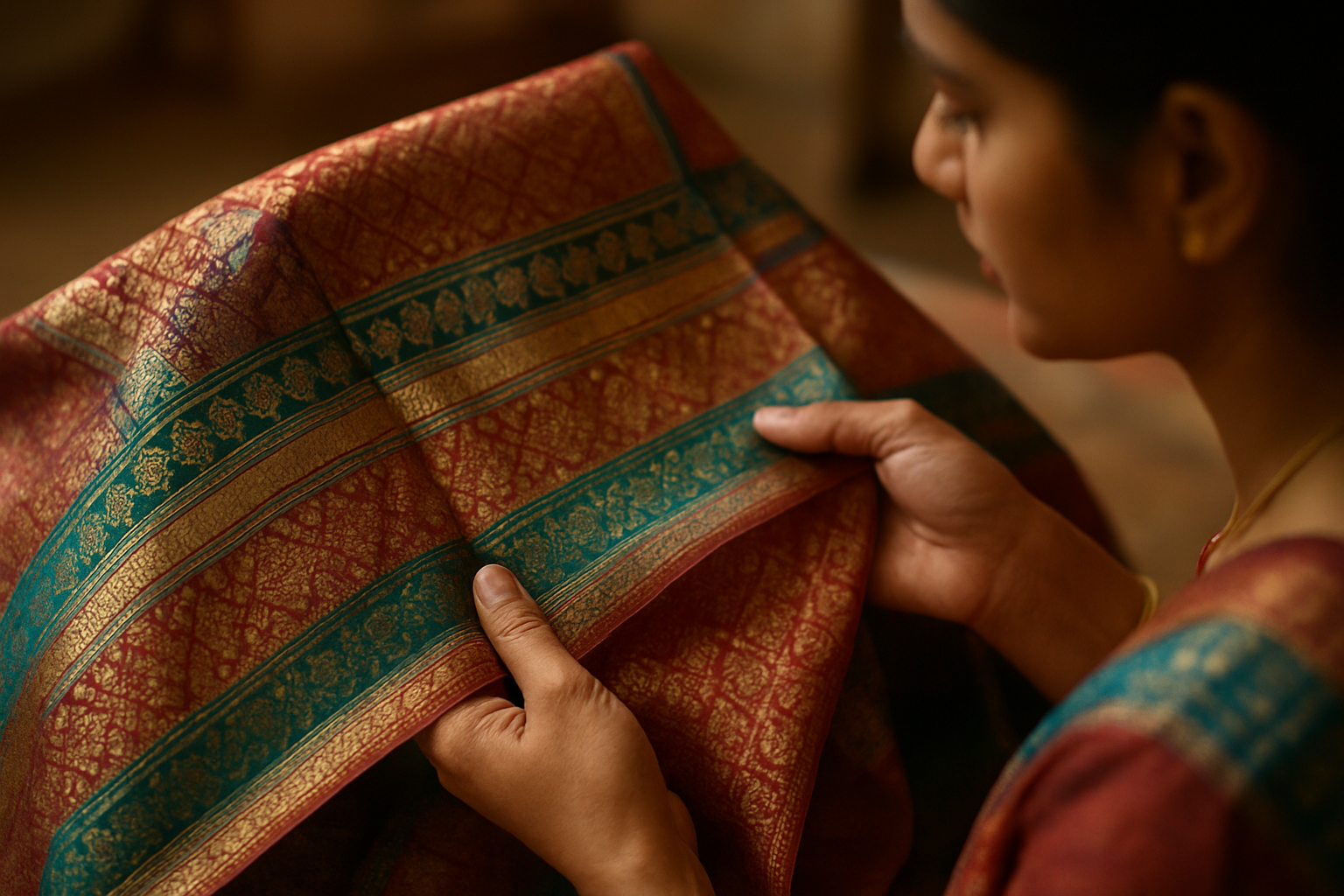
Authentic powerloom sarees display remarkable geometric precision that sets them apart from handwoven alternatives. The mechanical weaving process creates perfectly aligned motifs with consistent spacing between design elements. Run your fingers along the pattern lines – genuine powerloom work maintains uniform tension, resulting in straight borders and evenly distributed designs. Look for repeated motifs that mirror each other exactly across the fabric width. Any irregular spacing or crooked alignment suggests inferior manufacturing or potential counterfeiting.
Check for Design Clarity and Sharpness
Genuine saree identification relies heavily on examining design definition and edge clarity. High-quality powerloom sarees showcase crisp, well-defined patterns with sharp edges that don’t blur or fade into surrounding areas. Each design element should appear distinct and clearly separated from adjacent motifs. Poor-quality imitations often display fuzzy boundaries, bleeding colors, or indistinct pattern edges. Premium powerloom technology produces intricate designs with exceptional detail retention, making every thread placement deliberate and precise.
Verify Color Consistency Throughout the Saree
Powerloom saree quality check demands thorough color examination from pallu to border. Authentic pieces maintain uniform dye saturation across the entire length, with no variations in shade intensity or color bleeding between different sections. Unroll several yards to inspect color consistency under natural light. Quality powerloom manufacturing ensures even dye penetration through controlled tension and precise yarn handling. Watch for color variations that might indicate substandard dyeing processes or mixed yarn batches, which commonly appear in counterfeit products.
Verify the Borders and Pallu Construction
Examine Border Attachment Quality
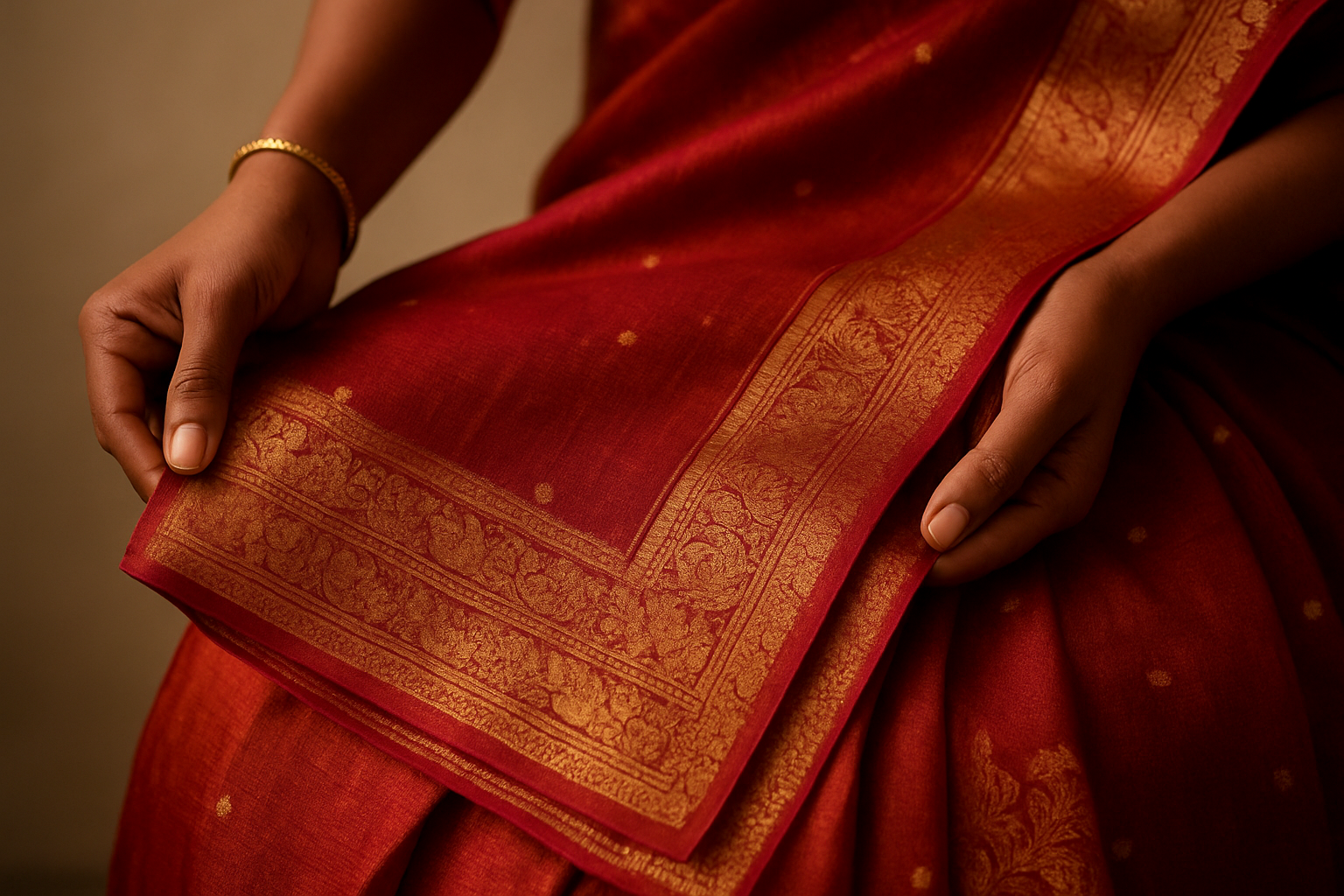
Check how the border connects to the main fabric by running your fingers along the junction. Authentic powerloom sarees feature seamless integration where borders are woven directly into the fabric structure rather than stitched on afterward. Look for consistent thread density and color matching at attachment points. Poor quality sarees often show visible seam lines, uneven stitching, or color variations where borders meet the body fabric.
Check Pallu Design Intricacy and Finishing
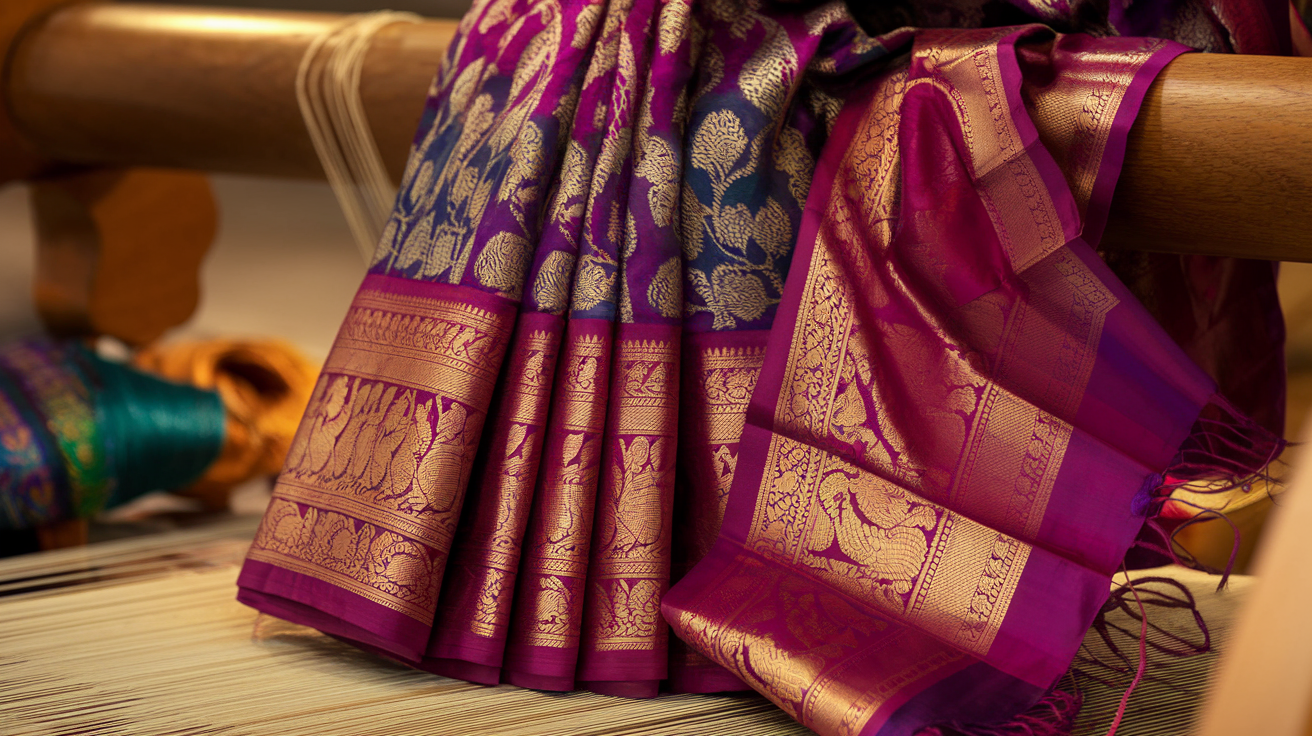
The pallu reveals the true craftsmanship of authentic powerloom sarees through its detailed motifs and precise finishing. Examine the design clarity – genuine pieces showcase sharp, well-defined patterns with consistent thread tension throughout. Notice how colors transition smoothly in gradient designs and check for any loose threads or irregular weaving patterns. Quality pallus maintain their structural integrity even after multiple washes.
Look for Proper Reinforcement at Stress Points
Authentic powerloom sarees include strategic reinforcement at areas prone to wear and tear. Check the pallu corners, border edges, and blouse piece attachments for double-stitched seams or additional fabric backing. These reinforcements prevent tearing during regular use and indicate manufacturer attention to durability. Run your hands along these areas to feel for extra thickness or supportive backing materials.
Assess Overall Border Proportions
Traditional authentic powerloom sarees maintain specific width ratios between borders and the main fabric body. Standard borders typically measure 2-4 inches for regular sarees and up to 6 inches for festival varieties. Compare the border width to the saree’s total width – proportions should feel balanced and aesthetically pleasing. Disproportionately wide or narrow borders often indicate mass-produced, lower-quality pieces.
Test Border Flexibility and Drape
Quality borders enhance the saree’s natural drape rather than restricting movement. Gently fold and manipulate the border section to assess its flexibility and recovery. Authentic powerloom sarees feature borders that bend smoothly without creating harsh creases or breaking threads. The border should complement the main fabric’s weight and texture, creating seamless flow when draped. Stiff, cardboard-like borders suggest poor quality construction or excessive sizing treatments.
Check Manufacturing Labels and Authenticity Markers
Look for official powerloom certification tags
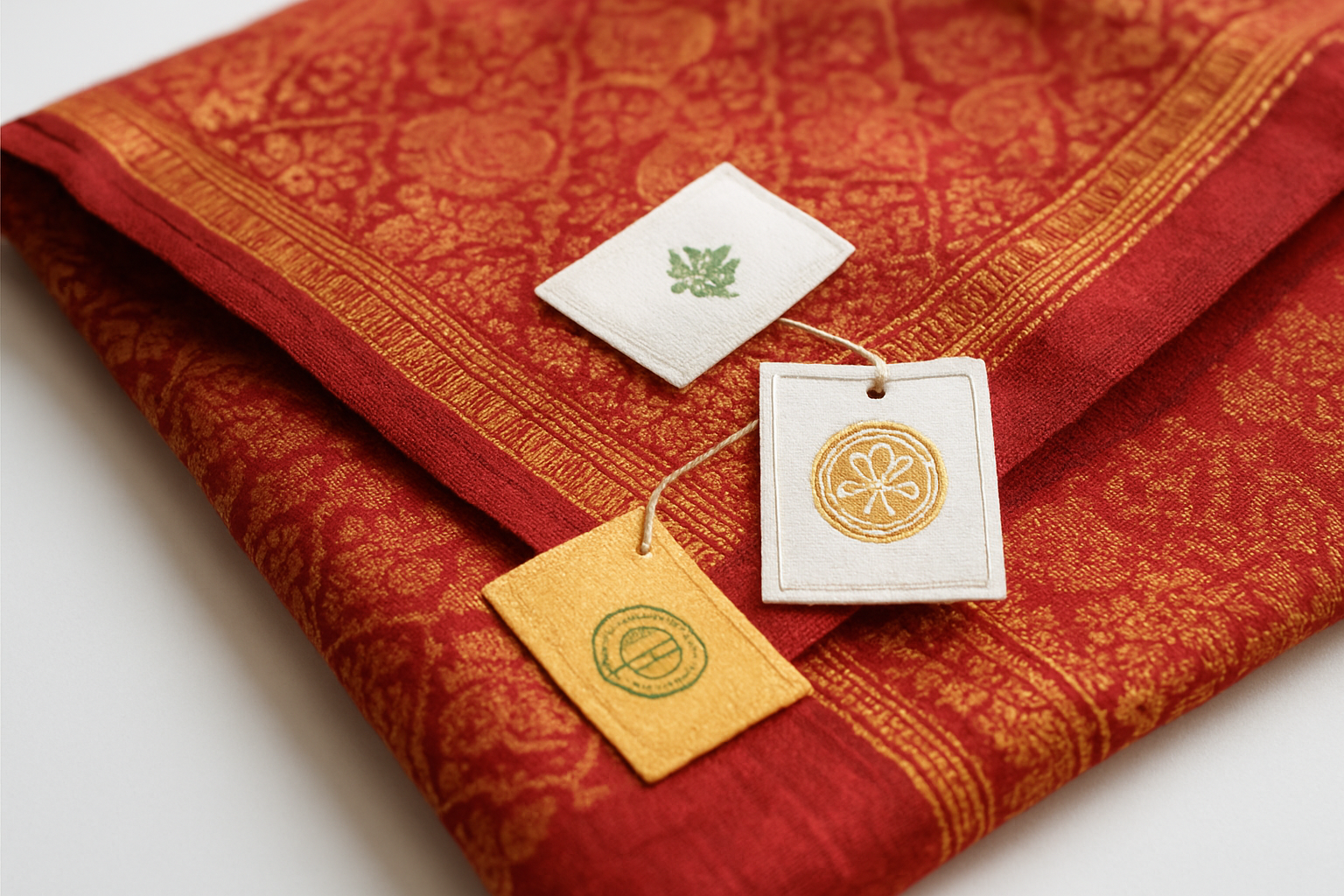
Authentic powerloom sarees come with specific certification tags that distinguish them from machine-made imitations. These tags typically include government textile board certifications or recognized industry standards. Look for holographic seals, unique serial numbers, or QR codes that verify the saree’s authenticity. Genuine powerloom manufacturers often display their production credentials prominently on these tags.
Verify manufacturer details and contact information
Reliable powerloom saree producers provide complete contact information including physical addresses, phone numbers, and official websites. Cross-check this information online to confirm the manufacturer’s legitimacy and reputation in the textile industry. Authentic brands maintain active customer service channels and have established market presence. Be cautious of sarees with vague or missing manufacturer details, as these often indicate counterfeit products.
Check for quality assurance stamps
Legitimate powerloom sarees feature quality assurance stamps from recognized textile authorities or certification bodies. These stamps guarantee that the saree meets specific production standards and material quality benchmarks. Look for embossed or printed stamps that include date codes, quality grades, or compliance certifications. Many authentic powerloom saree manufacturers also include care instruction labels and fabric composition details as part of their quality assurance process.
Assess Value Indicators and Pricing Authenticity

Compare prices with market standards
Research authentic powerloom sarees across multiple retailers to establish baseline pricing. Genuine powerloom sarees typically range from ₹800-₹5,000 depending on silk quality, design complexity, and brand reputation. Compare similar designs and fabric types from established sellers to understand fair market value before making purchasing decisions.
Evaluate cost versus quality ratio
Quality authentic powerloom sarees justify their pricing through superior fabric weight, vibrant color retention, and precise weaving patterns. Examine the saree’s drape, texture, and finishing details against the asking price. Premium powerloom pieces should feel substantial, showcase crisp motifs, and demonstrate consistent thread tension throughout the fabric construction.
Check for reasonable pricing without suspiciously low rates
Extremely low-priced sarees often indicate compromised quality or counterfeit products. Authentic powerloom sarees require quality materials and skilled craftsmanship, making rock-bottom prices unrealistic. Be cautious of prices significantly below market standards, as genuine silk powerloom sarees cannot be produced profitably at unreasonably cheap rates without cutting corners.
Verify seller credibility and reputation
Purchase authentic powerloom sarees from established retailers with positive customer reviews and transparent business practices. Check seller ratings, read customer feedback, and verify business registration details. Reputable sellers provide detailed product descriptions, clear return policies, and responsive customer service. Avoid vendors with limited information or suspiciously perfect reviews.
Shopping for powerloom sarees doesn’t have to feel overwhelming when you know what to look for. By checking the fabric texture, examining the weaving patterns, inspecting the borders and pallu, looking for proper labels, and understanding fair pricing, you’ll be able to spot authentic pieces with confidence. These simple steps help you avoid common pitfalls and ensure you’re getting genuine quality for your money.
The next time you’re saree shopping, take a few extra minutes to run through this quick checklist. Your investment deserves this attention to detail, and authentic powerloom sarees will reward you with lasting beauty and durability. Trust your hands to feel the quality, your eyes to catch the craftsmanship details, and your knowledge to make smart buying decisions.