


Why Synthetic Sarees Are a Trap (What to Buy Instead)
You picked up that shiny polyester saree because it looked gorgeous and cost next to nothing. Two wears later, you’re dealing with rashes, a saree that’s lost its shape, and a growing guilt about where it’ll end up after you toss it. Sound familiar?
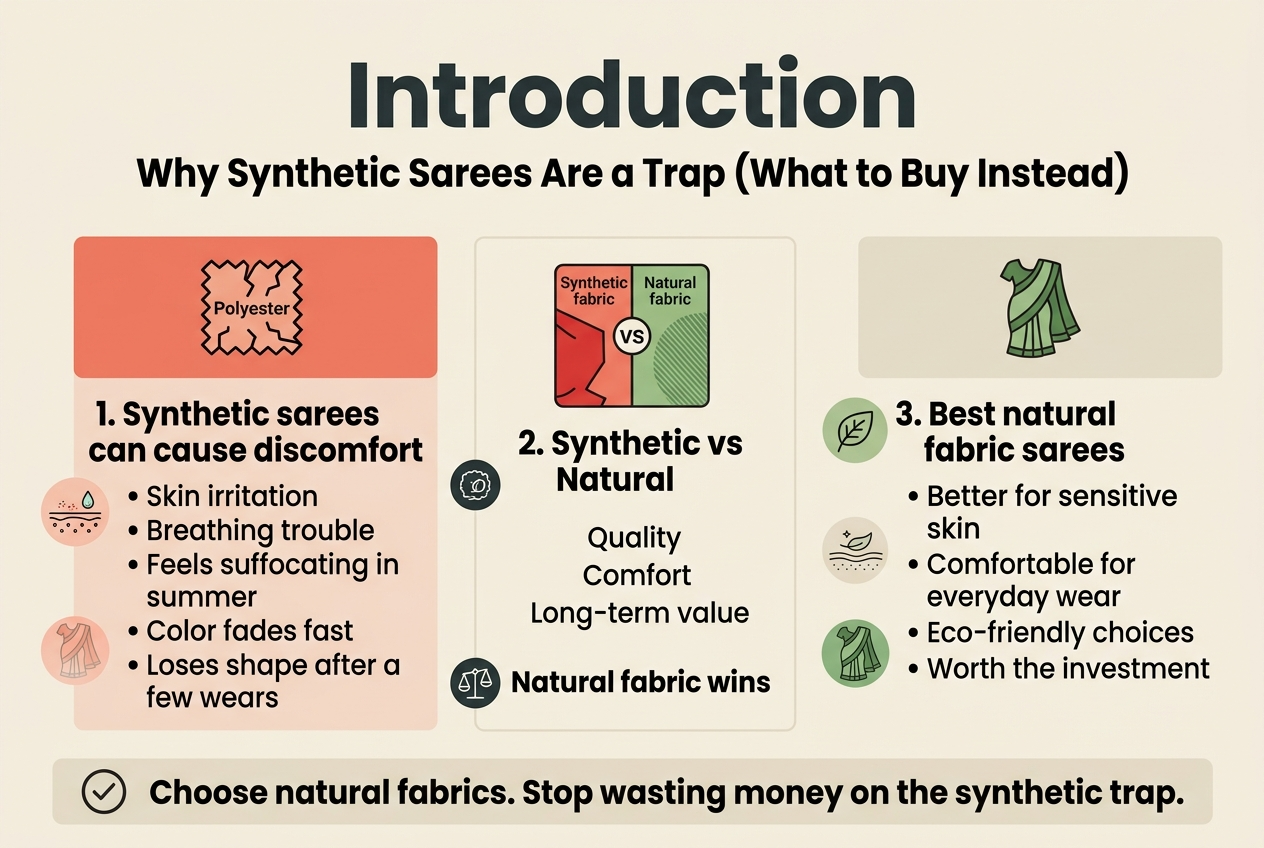
If you’ve ever wondered why your synthetic sarees feel suffocating in summer or why the color fades faster than expected, you’re not alone. This guide is for anyone who loves sarees but is tired of wasting money on synthetic fabric sarees that look great on the hanger and disappoint everywhere else.
Here’s what we’re getting into:
- The real polyester saree health risks — from skin irritation to breathing trouble, the dangers of synthetic fabric sarees go deeper than most people realize
- Why synthetic vs natural sarees isn’t even a close comparison when it comes to quality, comfort, and long-term value
- The best natural fabric sarees you can actually buy right now, including eco-friendly sarees that work for sensitive skin and everyday wear
No fluff, no complicated jargon — just straight talk about how to choose the right saree and stop falling for the synthetic trap.
The Hidden Dangers of Synthetic Sarees on Your Skin and Health
How Synthetic Fabrics Trap Heat and Cause Skin Irritation
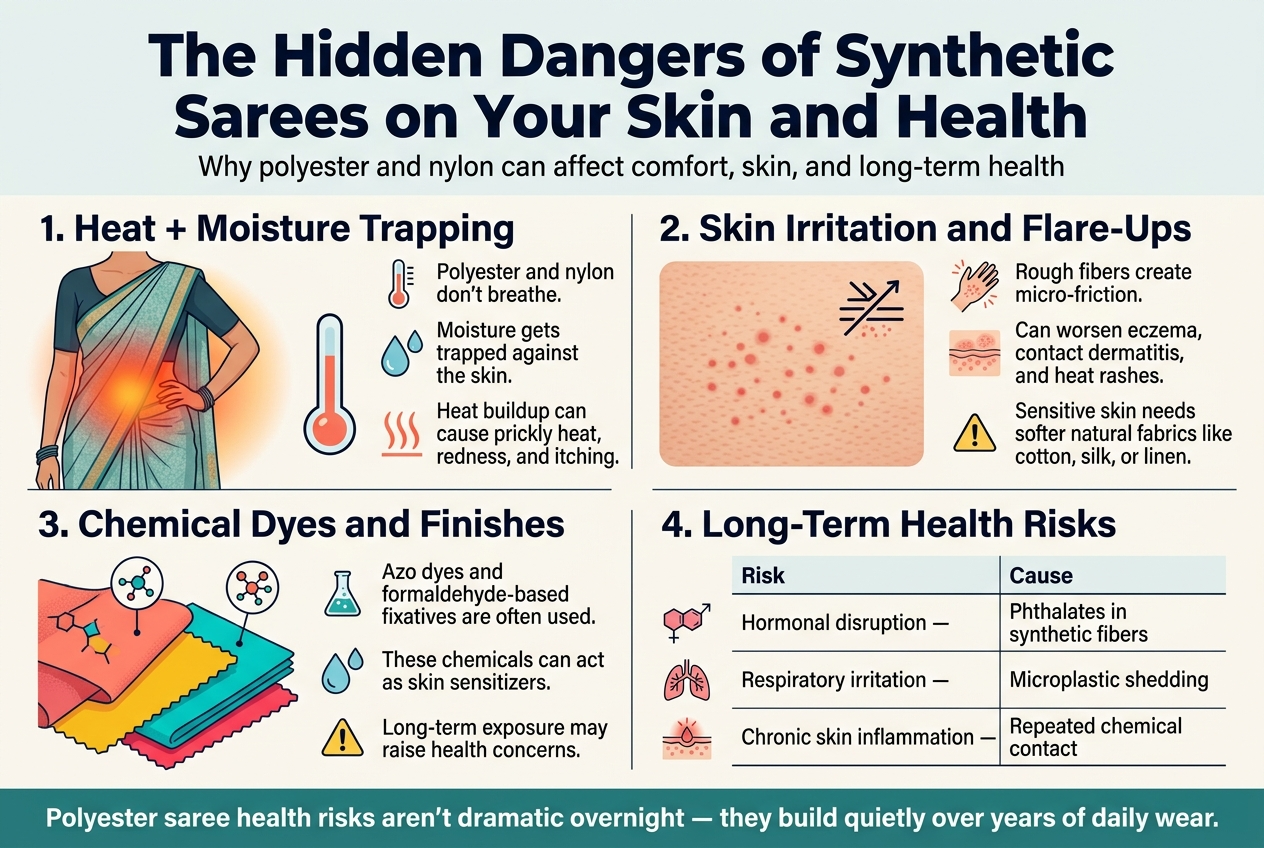
Polyester and nylon sarees don’t breathe. Unlike natural fabrics, they create a moisture-trapping layer against your skin, turning a regular afternoon into a sweaty, uncomfortable ordeal. This trapped heat raises your skin’s surface temperature, leading to prickly heat, redness, and constant itching — especially around the midriff where the saree sits tightest.
Why Synthetic Sarees Worsen Conditions Like Eczema and Rashes
If you already have sensitive skin, synthetic sarees are genuinely bad news. The rough texture of polyester fibers causes constant micro-friction against the skin. For anyone prone to eczema, contact dermatitis, or heat rashes, this friction combined with moisture buildup creates the perfect storm for a flare-up. Best sarees for sensitive skin are always natural — cotton, silk, or linen.
The Toxic Chemicals Used in Synthetic Dye Processes
Synthetic saree manufacturers often use azo dyes and formaldehyde-based fixatives to achieve bright, lasting colors. These chemicals are known skin sensitizers and suspected carcinogens with prolonged exposure.
Long-Term Health Risks of Prolonged Synthetic Fabric Contact
| Risk | Cause |
|---|---|
| Hormonal disruption | Phthalates in synthetic fibers |
| Respiratory irritation | Microplastic shedding |
| Chronic skin inflammation | Repeated chemical contact |
Polyester saree health risks aren’t dramatic overnight — they build quietly over years of daily wear.
Why Synthetic Sarees Fail to Deliver on Quality and Value
How Synthetic Sarees Lose Shape and Sheen After Few Washes
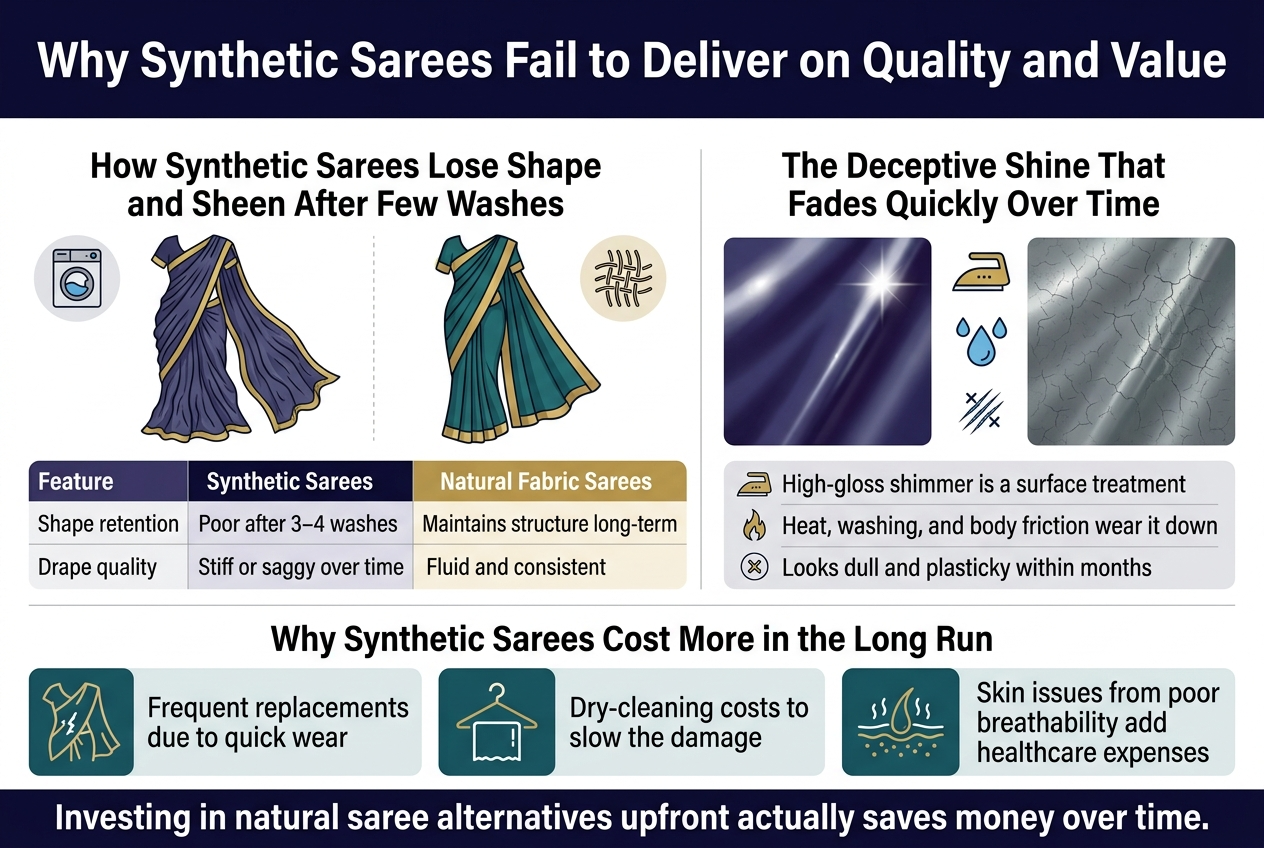
Synthetic sarees might look stunning on the hanger, but after two or three washes, the story changes fast. Polyester and nylon fabrics stretch unevenly, lose their drape, and start looking tired and limp. Unlike natural fabrics that actually soften beautifully with age, synthetic ones just deteriorate.
| Feature | Synthetic Sarees | Natural Fabric Sarees |
|---|---|---|
| Shape retention | Poor after 3–4 washes | Maintains structure long-term |
| Drape quality | Stiff or saggy over time | Fluid and consistent |
The Deceptive Shine That Fades Quickly Over Time
That high-gloss shimmer on synthetic sarees? It’s a surface treatment, not the fabric itself. Heat from ironing, repeated washing, and even body friction wear it down fast. What looked like silk initially ends up looking dull and plasticky within months. This is a classic danger of synthetic fabric sarees — the appeal is entirely surface-level.
Why Synthetic Sarees Cost More in the Long Run
The low price tag is misleading. When you factor in:
- Frequent replacements due to quick wear
- Dry-cleaning costs to slow the damage
- Skin issues from poor breathability adding to healthcare expenses
…synthetic sarees quietly drain your wallet. Investing in natural saree alternatives upfront actually saves money over time.
The Environmental Cost of Choosing Synthetic Sarees
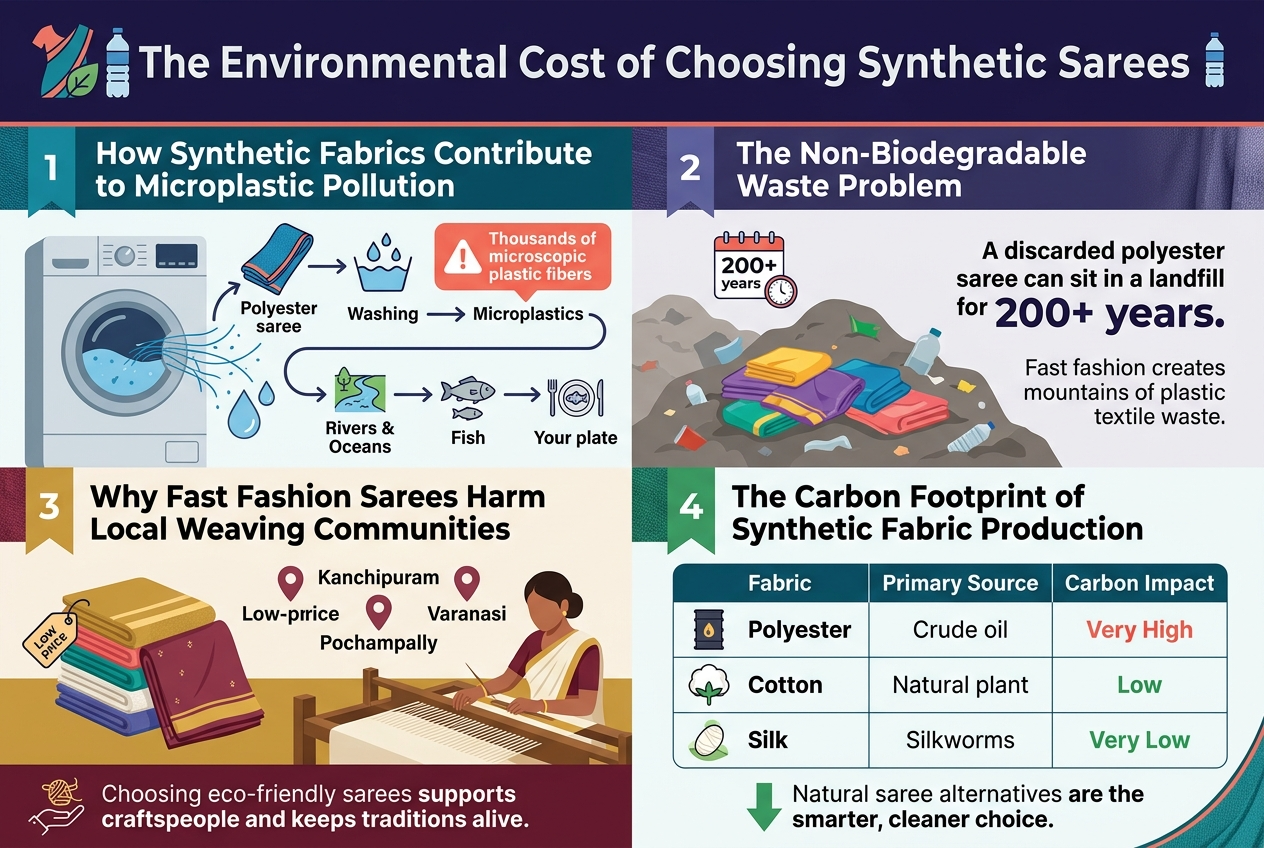
How Synthetic Fabrics Contribute to Microplastic Pollution
Every time you wash a polyester saree, it sheds thousands of microscopic plastic fibers into the water. These microplastics slip through sewage filters, enter rivers and oceans, and eventually make their way into fish — and onto your plate.
The Non-Biodegradable Waste Problem
Synthetic sarees don’t break down. A discarded polyester saree can sit in a landfill for 200+ years. With fast fashion driving rapid trends, millions of these sarees get tossed out seasonally, creating mountains of plastic textile waste with zero natural decomposition.
Why Fast Fashion Sarees Harm Local Weaving Communities
Cheap synthetic sarees flood markets at throwaway prices, making it impossible for traditional handloom weavers to compete. When buyers chase low-cost polyester options, skilled artisans in communities like Kanchipuram, Varanasi, and Pochampally lose their livelihoods. Choosing eco-friendly sarees directly supports these craftspeople and keeps centuries-old weaving traditions alive.
The Carbon Footprint of Synthetic Fabric Production
| Fabric | Primary Source | Carbon Impact |
|---|---|---|
| Polyester | Crude oil | Very High |
| Cotton | Natural plant | Low |
| Silk | Silkworms | Very Low |
Synthetic fabric production is petroleum-based, energy-intensive, and releases significant greenhouse gases — making natural saree alternatives the smarter, cleaner choice.
Natural Fabric Sarees That Outperform Synthetic in Every Way
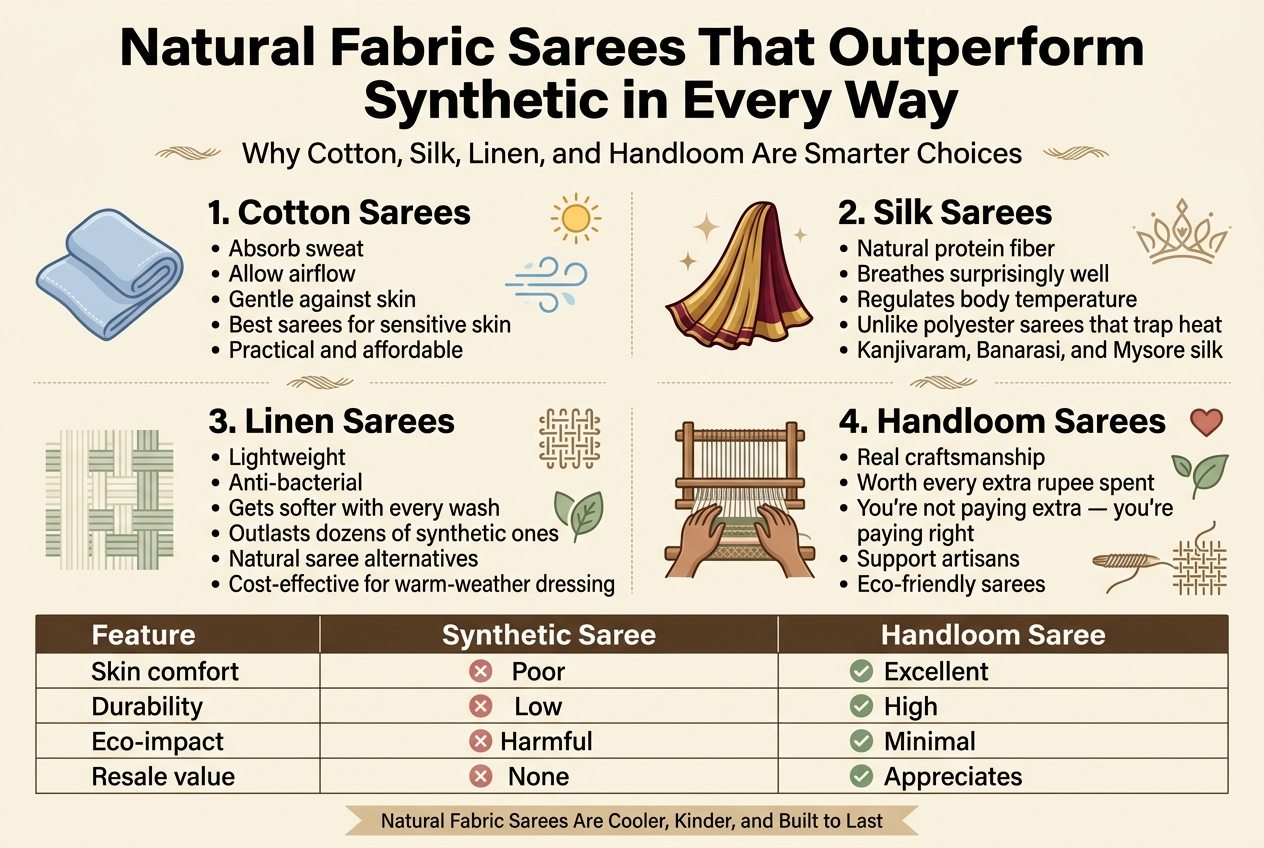
Why Cotton Sarees Are the Best Everyday Comfortable Choice
Cotton sarees are a lifesaver in India’s heat. They absorb sweat, allow airflow, and feel gentle against skin — making them the go-to pick for best sarees for sensitive skin. Casual daily wear has never been more practical or affordable.
How Silk Sarees Offer Unmatched Elegance and Breathability
Silk is a natural protein fiber that breathes surprisingly well. Unlike polyester sarees that trap heat, silk regulates body temperature. Kanjivaram, Banarasi, and Mysore silk are timeless choices that only get better with careful wear.
The Timeless Appeal and Durability of Linen Sarees
Linen sarees are criminally underrated. They’re lightweight, anti-bacterial, and get softer with every wash. A good linen saree outlasts dozens of synthetic ones — making them genuinely cost-effective natural saree alternatives for warm-weather dressing.
Why Handloom Sarees Are Worth Every Extra Rupee Spent
| Feature | Synthetic Saree | Handloom Saree |
|---|---|---|
| Skin comfort | Poor | Excellent |
| Durability | Low | High |
| Eco-impact | Harmful | Minimal |
| Resale value | None | Appreciates |
Handloom sarees carry real craftsmanship. You’re not paying extra — you’re paying right. These eco-friendly sarees support artisans and your skin simultaneously.
Smart Tips for Buying the Right Saree Without Getting Fooled
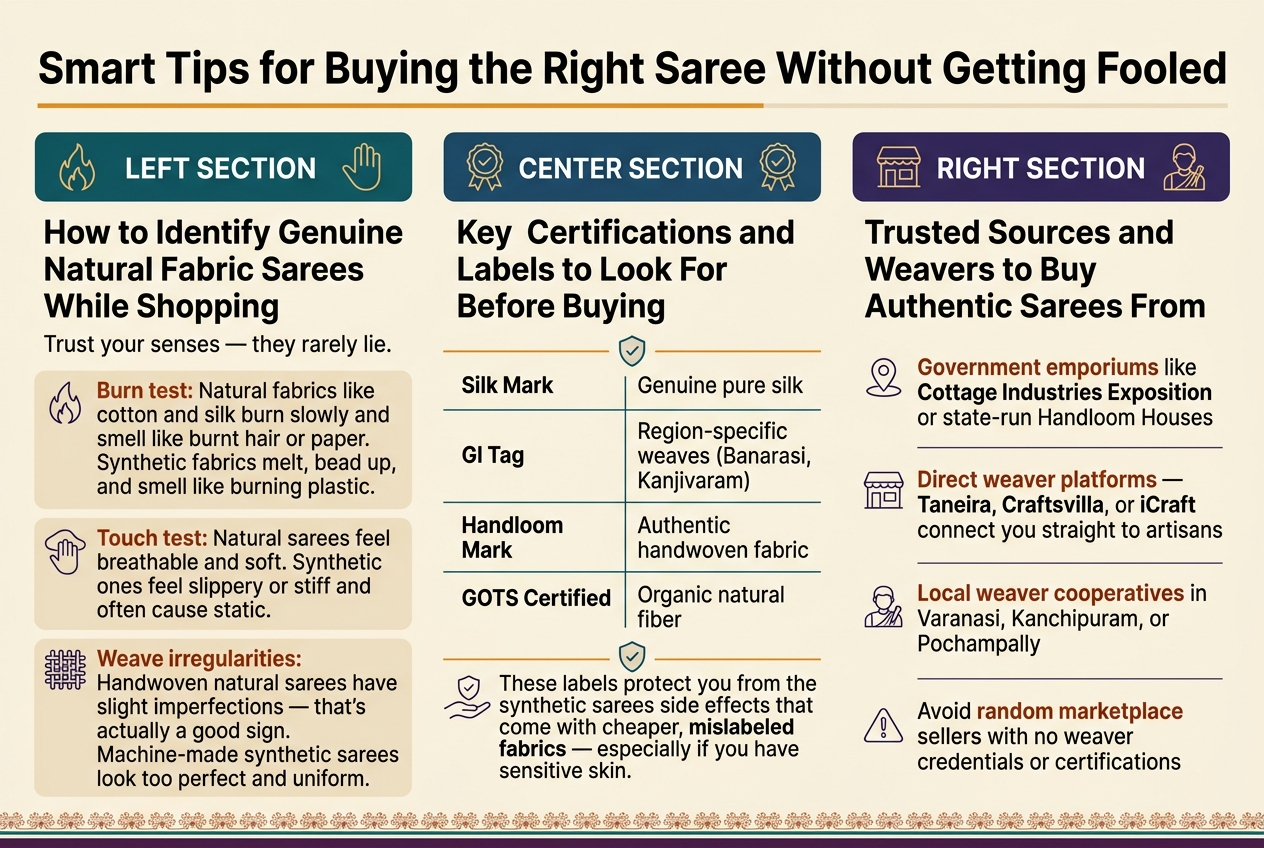
How to Identify Genuine Natural Fabric Sarees While Shopping
Trust your senses — they rarely lie.
- Burn test: Natural fabrics like cotton and silk burn slowly and smell like burnt hair or paper. Synthetic fabrics melt, bead up, and smell like burning plastic.
- Touch test: Natural sarees feel breathable and soft. Synthetic ones feel slippery or stiff and often cause static.
- Weave irregularities: Handwoven natural sarees have slight imperfections — that’s actually a good sign. Machine-made synthetic sarees look too perfect and uniform.
Key Certifications and Labels to Look For Before Buying
Before spending your money, scan for these markers of authenticity:
| Certification | What It Confirms |
|---|---|
| Silk Mark | Genuine pure silk |
| GI Tag | Region-specific weaves (Banarasi, Kanjivaram) |
| Handloom Mark | Authentic handwoven fabric |
| GOTS Certified | Organic natural fiber |
These labels protect you from the synthetic sarees side effects that come with cheaper, mislabeled fabrics — especially if you have sensitive skin.
Trusted Sources and Weavers to Buy Authentic Sarees From
- Government emporiums like Cottage Industries Exposition or state-run Handloom Houses
- Direct weaver platforms — Taneira, Craftsvilla, or iCraft connect you straight to artisans
- Local weaver cooperatives in Varanasi, Kanchipuram, or Pochampally
- Avoid random marketplace sellers with no weaver credentials or certifications
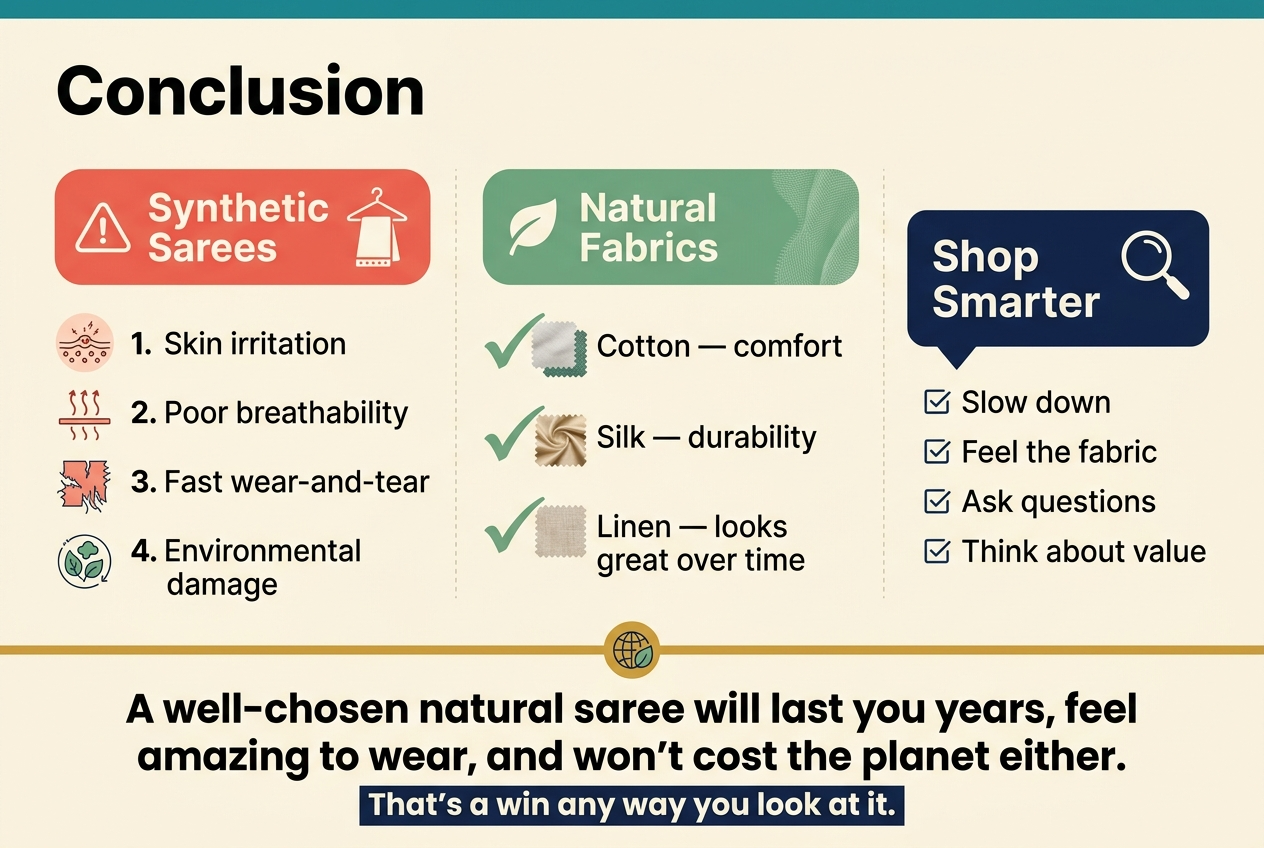
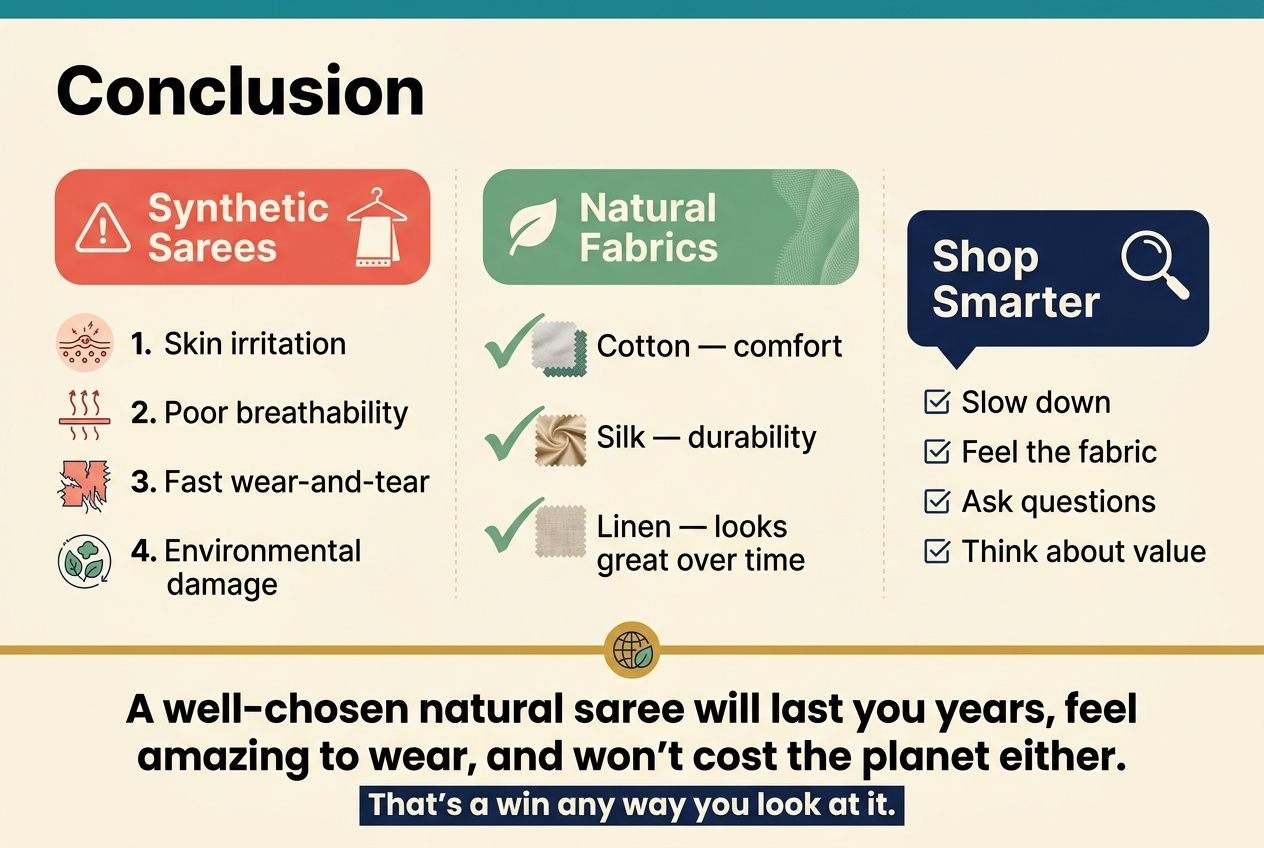
Synthetic sarees might look great on a hanger or in a product photo, but the reality of wearing one tells a very different story. Between the skin irritation, the poor breathability, the fast wear-and-tear, and the environmental damage they leave behind, they simply aren’t worth the money you think you’re saving. Natural fabrics like cotton, silk, and linen give you comfort, durability, and a look that actually holds up over time.
Next time you’re saree shopping, slow down before grabbing the cheapest synthetic option. Feel the fabric, ask questions, and think about what you’re really getting for your money. A well-chosen natural saree will last you years, feel amazing to wear, and won’t cost the planet either. That’s a win any way you look at it.

